Home/ Surf
Build a surf school in Costa Rica.
Minutes from the Pavones point — one of the longest left-hand waves on Earth, with rides up to two or three minutes. A ridge built for a surf camp that books itself.
Minutes from the Pavones point — one of the longest left-hand waves on Earth, with rides up to two or three minutes. A ridge built for a surf camp that books itself.
Surfers plan whole trips around Pavones. A camp here doesn't need to invent demand — it just needs a base above the wave, and this ridge is exactly that: titled, terraced and ready.
A ~2–3 minute ride on a good south swell, about a 12-minute drive from the gate.
Build-ready terraces for dorms, cabinas and a clubhouse over the gulf.
A pool already waits on the top terrace for post-session recovery.
Paved almost the whole way; village services ~750 m at Rio Claro.
Forest, wildlife and ocean keep non-surfing partners happy too.
Fee-simple land, ready for permits — not a fragile concession.
You get flat, prepared terraces to build beds and a clubhouse, a pool for recovery, and protected forest for the quiet between sessions — all a short drive from the line-up. It is the rare surf-camp site that is both close to the wave and on clean title.
I will be honest about my bias: I think Pavones is one of the great surf addresses on the planet, and I think this ridge is one of the best places near it to base a surf school or surf camp. If you have been searching for land for sale in Pavones with the idea of teaching, hosting and living the surf life in Costa Rica, let me walk you through why this 1.97-hectare property in La Yerba, Golfito keeps pulling me back.
Everything about a surf camp starts with the wave, so let me start there. Pavones is world-famous for a left-hand point break that, on a solid south swell, can hold a ride of two to three minutes — routinely listed among the longest left waves on Earth. People genuinely fly across the world for a single session here, and they plan entire trips around the swell window from roughly April to October. That is the rarest thing a surf school can have: built-in, global demand for the product right outside the door. The main break is about a twelve-minute drive from this property — close enough to run dawn sessions and still have your students back for breakfast, far enough that your camp sits above the village in peace rather than in the middle of it.
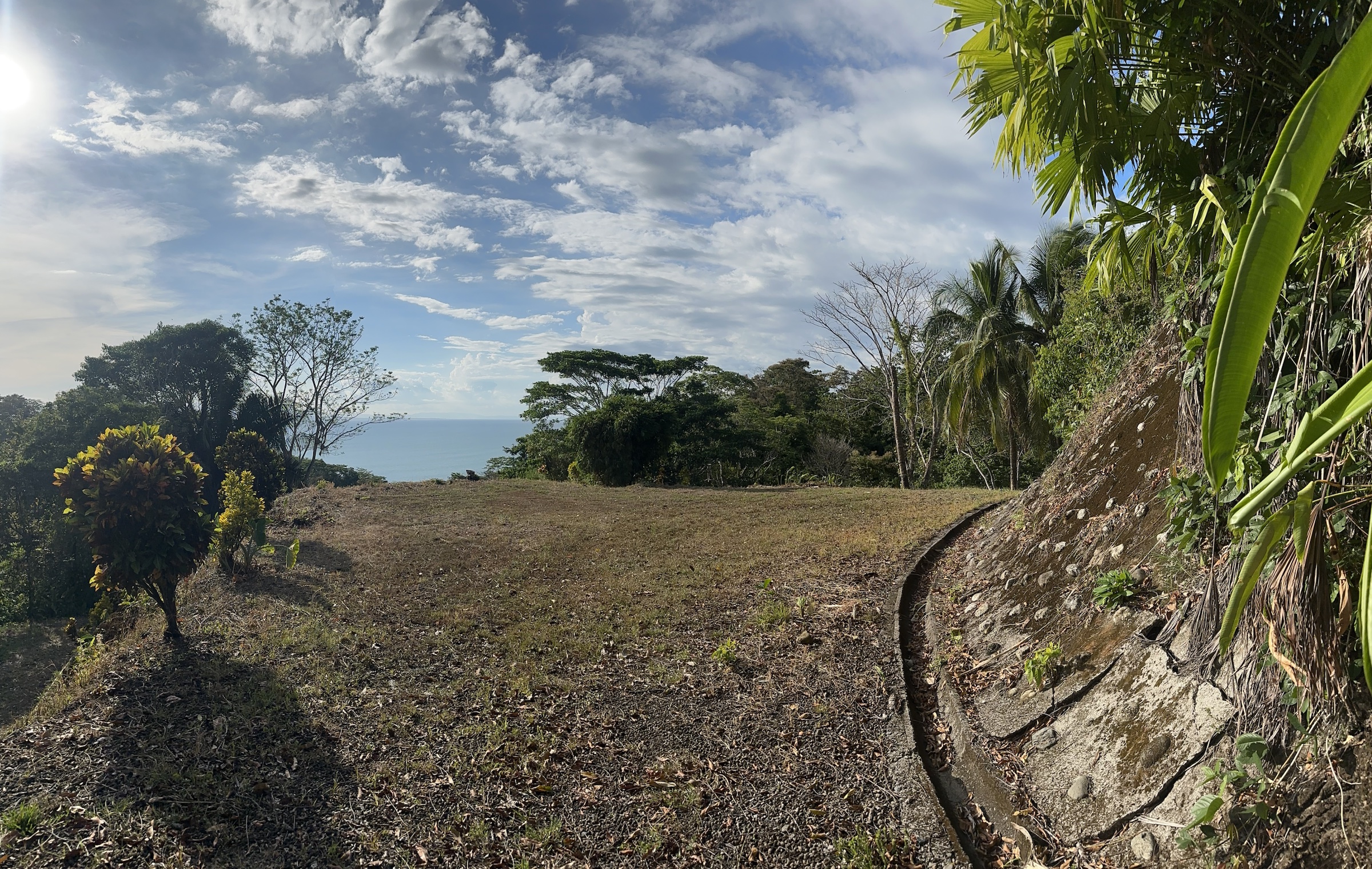
A surf camp needs beds, a gathering space, and somewhere to decompress between sessions, and this land is laid out for exactly that. The buildable sector has three level terraces already cut and stabilised by heavy machinery, connected by internal gravel roads. I picture dorms and private cabinas on the lower platforms, a clubhouse and kitchen where the day's stories get told, and the existing pool on the top terrace as the recovery zone after a long morning of paddling. The retaining walls, the drainage, the access — the unglamorous infrastructure that usually eats your first construction budget — is already in the ground. That means more of your money goes into rooms, boards and guest experience, and less into moving dirt.
Here is something I have learned watching how people travel: the surfers come for the wave, but the people travelling with them — partners, friends, families — stay for everything else. About 1.28 hectares of this property is protected secondary rainforest full of birdsong, monkeys and sloths, legally protected so it can never be built out around you. That forest is what turns a two-night surf stop into a week-long booking. It is the difference between a hostel by the road and a destination people remember. For a surf school trying to lift its average stay and its off-peak occupancy, that private wall of jungle is a quiet commercial asset.
When you buy land in Costa Rica to build a business, you are also buying the right to actually build it, and that is where many Pavones properties fall down. A lot of the coast is maritime-zone land on government concessions. This property is fully titled, fee-simple land — a registered finca inscrita, Folio Real 6-190768-000 — sitting between 78 and 152 metres of elevation, well clear of the maritime zone. Foreigners own it outright, no local partner required. The 2025 INTA soil studies certify it at 100% uso conforme, which is the clean starting point for your SETENA and municipal permits when you build accommodation on the disturbed-soil terraces. In a region where casual buyers get burned by unclear paperwork, this is the boring, beautiful kind of certainty a real business needs.
A surf camp runs on logistics as much as on stoke. This land is about 750 metres east of the Rio Claro de Pavones supermarket, so supplies, fuel and basic services are minutes away. The drive in from the coast is paved nearly the whole way, with only the final climb on gravel — which matters enormously in the rainy season when bad roads strand guests and spoil reputations. Up on the ridge you also get cooler air and a steady breeze, plus panoramic views of the Golfo Dulce that make the clubhouse deck sell itself on social media. Every photo your guests post becomes marketing for the next booking.
I think the timing matters. As Guanacaste in the north has filled up and grown expensive, the energy in Costa Rican surf travel and investment has been moving south toward Golfito, Pavones and Osa, where the coast is still wild and the land still affordable by comparison. Pavones is also outgrowing its old identity as a pure surfers' secret; it is becoming a place people choose for nature, wellness and a healthier pace of life. A surf school here can ride both currents — the timeless pull of a world-class wave and the rising tide of travellers discovering the South Zone of Costa Rica for the first time.
So when I picture this property, I do not just see land for sale in Golfito. I see a surf camp with the wave around the corner, beds on prepared terraces, a recovery pool already built, a private rainforest that keeps guests an extra week, and a clean title that lets you build it for real. If that is the life and the business you are after, message me on WhatsApp — I will send you the documents, answer every question, and walk the terraces with you whenever you can come.
Keep exploring:
On a strong south swell the point can hold a ride of two to three minutes — among the longest left-hand waves anywhere.
About a 12-minute drive — the ridge sits above the village, ~750 m east of Rio Claro de Pavones.
Yes — the disturbed-soil terraces are prepared for building under standard Costa Rican permits.
No agents in the middle — ask the price, request documents or arrange a visit, straight on WhatsApp.