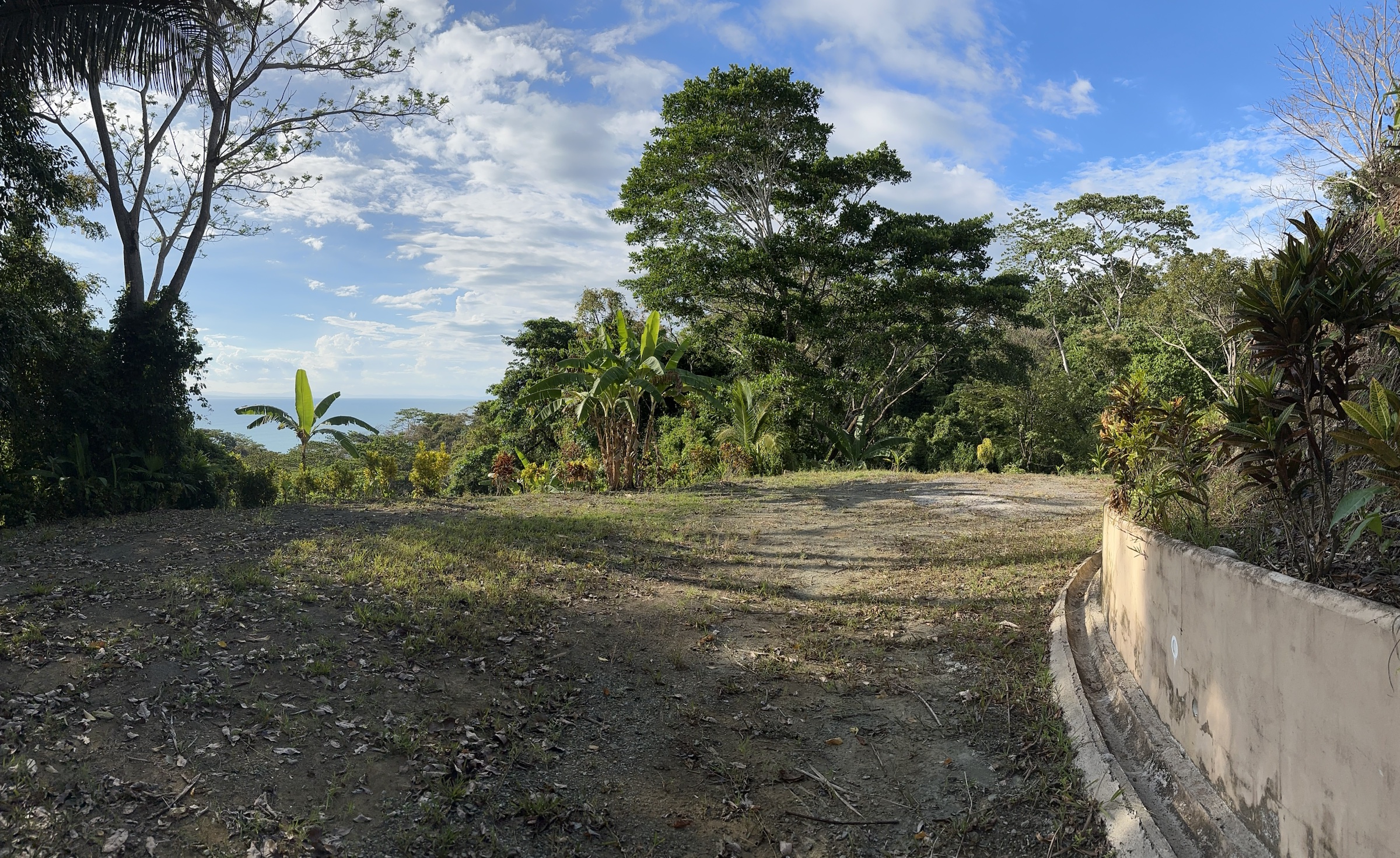
When I started looking for land in the south of Costa Rica, I read the same recycled articles you are probably reading now. Most of them are written by agencies that have never walked the land they sell. So let me write the guide I wish I had found: a plain explanation of how a foreigner actually buys land in Costa Rica in 2026 — what your rights are, which documents matter, what it costs, and where people get burned. Everything here comes from doing it myself, on the ridge this site is about.
Start with the good news: for normal titled land, Costa Rica gives foreigners exactly the same ownership rights as citizens. You do not need residency, a local partner, a trust or a special permit. A tourist with a passport can own fee-simple property outright, register it in their own name, sell it, rent it, mortgage it and leave it to their children. This is one of the reasons Costa Rica became the most trusted market in Central America.
The one big exception is the coast itself. The first 200 metres from the high-tide line is the Zona Marítimo Terrestre — the maritime zone — where land is almost never owned, only held in municipal concession, with real restrictions for foreigners. A large share of "beachfront deals" in places like Pavones sit inside that zone. The difference between titled land and a concession is so important that I wrote a separate guide about it. The short version: if you want true ownership, buy titled land above the zone — like the hills over the bay.
Every legitimate property in Costa Rica lives in the Registro Nacional, the national registry, under a folio real number. That number is the property's identity. Ask for it in your first conversation with any seller; if they cannot produce one, you are not looking at titled land — you are looking at "possession rights", and that is a different, riskier game entirely.
With the folio real you (or any lawyer, in minutes) can pull the estudio registral — the registry study. It shows the legal owner, the exact registered area, liens, mortgages, annotations and easements. You will also want the plano catastrado, the registered survey map, and you should walk the boundaries with it in hand. Costa Rica's registry is digital and public; there is no excuse for buying blind. For reference, the land this site describes is finca inscrita Folio Real 6-190768-000 — and I show the documents to any serious buyer before we ever talk price, because that is how it should work everywhere.
A clean title is necessary, not sufficient. Before money moves, a good lawyer will also check:
The mechanics are simpler than most buyers expect. You agree terms, usually sign an option-to-purchase agreement with a deposit into escrow (use a SUGEF-registered escrow company — never wire money to a seller's personal account), your lawyer completes due diligence during a 30–60 day window, and then the transfer deed is signed before a notario público. In Costa Rica the notary is a specially licensed attorney with public authority; only a notary can register the transfer in the Registro Nacional. Registration — not the handshake, not the payment — is what makes the land yours.
Budget roughly 3.5–4.5% of the price in closing costs: a 1.5% transfer tax, registry stamps of a bit under 1%, notary fees typically 1–1.5%, plus escrow and due-diligence costs. Who pays is negotiable; splitting 50/50 is common. There are no restrictions on funds coming from abroad, but banks will ask for source-of-funds paperwork — normal anti-money-laundering practice, not hostility.
Many foreigners hold land through a Costa Rican company — usually an SRL (limited liability company). It is not about secrecy; it simplifies inheritance, lets you add or remove family members by transferring shares, and keeps a future sale flexible. The trade-off is a modest annual corporate tax and a little bookkeeping. Buying in your personal name is perfectly legal and slightly cheaper to maintain. I would decide with your lawyer based on your estate planning, not on internet folklore.
Costa Rica is gentle on landowners. Annual property tax is 0.25% of the registered value — a quarter of one percent. If you hold through a corporation, add the annual corporate tax (a few hundred dollars). On raw land there is no "luxury tax"; that applies to high-value construction. The real holding cost people forget is presence: land left unwatched for years in any rural area of the tropics invites problems, from encroaching fences to squatters. The fix is cheap and normal — a local caretaker, clear boundaries, and visiting. My land sits five minutes above a village with neighbours who know it, which is worth more than any fence.
I went through every step above on this ridge: registered title under Folio Real 6-190768-000, INTA soil studies with 100% conforming use, municipal access, water in the village 750 metres away, boundaries surveyed, taxes current. Then I went further than I had to — cutting three building terraces, engineering retaining walls and drainage, and building a pool — because I originally prepared this land for my own project. You can read the full legal and physical breakdown on the land & legal page, and if you want to see how the documents look in practice, ask me directly — I share the title study and the INTA reports with any serious buyer on WhatsApp, before we ever discuss numbers.
Buying land in Costa Rica as a foreigner is genuinely straightforward when the property is clean and the process is respected. Take the steps in order, insist on the documents, and the country will meet you halfway — it has been doing exactly that for foreign buyers for decades.
Keep reading:
Yes. For titled (fee-simple) property, foreigners have the same ownership rights as Costa Rican citizens — no residency, partner or trust required. The exception is the 200-metre maritime zone, where land is held by municipal concession with restrictions.
No. You can buy, own, sell and inherit titled land on a tourist passport. Residency only matters for other things — like qualifying to hold a majority stake in a maritime-zone concession.
Plan for roughly 3.5–4.5% of the purchase price: 1.5% transfer tax, just under 1% in registry stamps, 1–1.5% notary fees, plus escrow and due diligence. Buyer and seller often split them.
No agents in the middle — ask the price, request documents or arrange a visit, straight on WhatsApp.