Walk into any beach town on Costa Rica's Pacific coast — Pavones included — and you will hear about land for sale "right on the water". What almost nobody tells you up front is that in Costa Rica there are two completely different legal animals being sold under that phrase: titled land, which you truly own, and maritime-zone concessions, which you lease from the local municipality. Confusing the two has cost foreigners more money on this coastline than any other single mistake. I own titled land in the hills above Pavones, I looked hard at concessions before buying, and this is the explanation I give friends when they ask.
Since 1977, Costa Rican law defines the first 200 metres inland from the mean high-tide line as the Zona Marítimo Terrestre (ZMT) — public land belonging to the nation. It has two bands. The first 50 metres is the public zone: nobody can own, lease, fence or build on it, ever. It is the beach itself, and it belongs to everyone. The next 150 metres is the restricted zone: still public land, but the local municipality can grant private parties a concession — a renewable lease, typically running five to twenty years — to use and build on it under an approved coastal plan.
So when someone offers you "beachfront property" on this coast, the honest first question is: titled, or concession? Within 200 metres of the tide, with rare historic exceptions, the answer is concession — or worse, nothing registered at all.
A concession is a real, registrable legal right, and plenty of legitimate hotels and homes operate on them. But be clear about what you would hold:
None of this makes concessions evil. It makes them a different product — one that should be priced like a lease, not like land you own. The problem is that on the ground they are often marketed and priced as if they were freehold.
Titled land — a finca inscrita with its own folio real number in the Registro Nacional — is full private property. You own it outright, forever, with the same rights as a Costa Rican citizen: sell it, mortgage it, subdivide it (where zoning allows), leave it to your heirs. No canon, no renewal, no residency clock, no coastal plan dictating your use. Your annual obligation to the state is a 0.25% property tax. When people say Costa Rica is the safest place in Central America for foreigners to own real estate, titled land is what they mean.
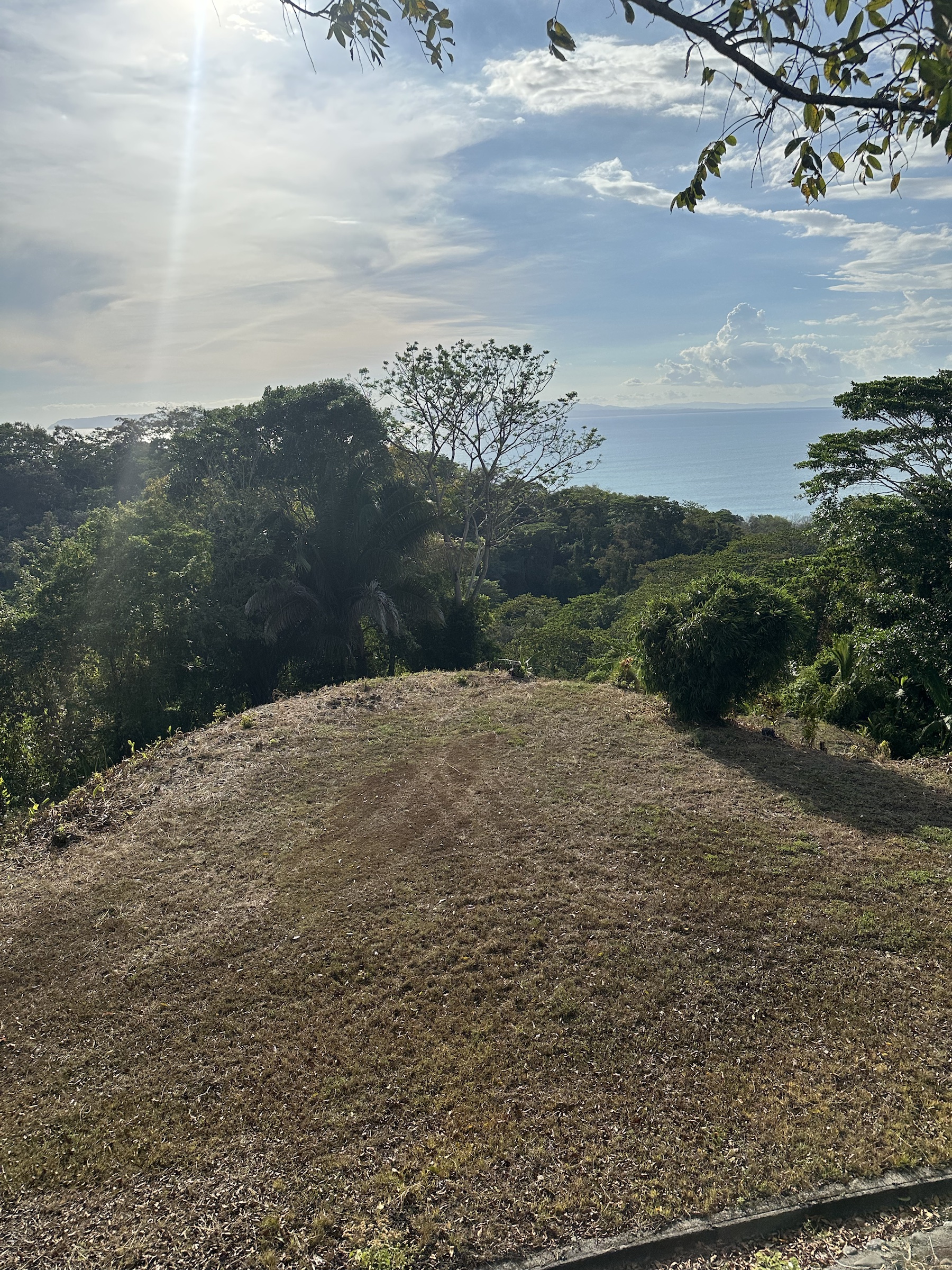
Pavones grew up directly on the water — the town, the cantina, the point itself all sit within a few hundred metres of the tide. That means much of the flat land close to the wave lies inside the ZMT, and changes hands as concessions or informal possession rights. Buyers arrive dreaming of a deed on the sand and discover the sand cannot be deeded. Meanwhile, the ridges that rise behind the town — a few minutes' drive up — are outside the zone entirely: normal, titled, fee-simple Costa Rica. That is exactly why I bought where I did: 78 to 152 metres above sea level, 100% titled, with the ocean view the beach lots cannot legally own and the breeze the beach never gets. My land is registered as Folio Real 6-190768-000, and the full legal picture is laid out on the land & legal page.
You do not need to take anyone's word for any of this. The checks are fast:
Between title and concession lives a third category you will meet constantly in the south: derecho de posesión — possession rights. This is land that was occupied, farmed and fenced for generations but never titled; what the seller transfers is not ownership recorded in the registry, but their documented history of possessing the parcel. Entire hillsides around the Golfo Dulce are held this way, and locals trade possession land among themselves without drama, because everyone knows everyone and the history is common knowledge.
For a foreign buyer, the calculus is different. You cannot verify possession in an afternoon the way you verify a folio real; you inherit whatever gaps exist in the story; banks will not touch it; and converting possession into registered title — an información posesoria process — takes years and can be contested. Some buyers accept all that in exchange for a much lower price, with a lawyer who specialises in exactly this. My own rule was simpler: at the scale of money where a family's savings are involved, I buy what the registry recognises. It is the difference between owning a story and owning a record — and only one of them survives a dispute between strangers.
So when you hear a price near Pavones that seems impossibly good, ask one quiet question first: título, concesión o posesión? The answer usually explains the price — and tells you which guide you should be reading next.
If your dream requires your toes in the sand at your own front door, a well-documented concession through a properly structured company, with a lawyer who specialises in ZMT law, can work — go in with open eyes and a lease-appropriate price. But if what you actually want is to own your piece of this coast — to build wealth on it, borrow against it, pass it on — then buy titled land on the first ridge line. You give up thirty seconds of walking distance and gain permanence, panoramas and legal peace. That trade built the case for a private home on this land, and after living with the view from the terraces, I have never once missed being on the flat.
Keep reading:
Only within limits: foreigners with less than five years' residency cannot hold a concession in their own name, and a concession-holding company cannot be majority foreign-owned. Many 'beachfront deals' quietly depend on nominee structures — a real risk.
No — legitimate businesses run on concessions. But it is a renewable municipal lease with an annual fee and use conditions, so it should be priced and treated as a lease. The mistake is paying freehold prices for it.
Ask for the folio real number and have a lawyer pull the estudio registral from the Registro Nacional — it takes minutes and shows the owner, area, liens and annotations. No folio real, no title.
No agents in the middle — ask the price, request documents or arrange a visit, straight on WhatsApp.