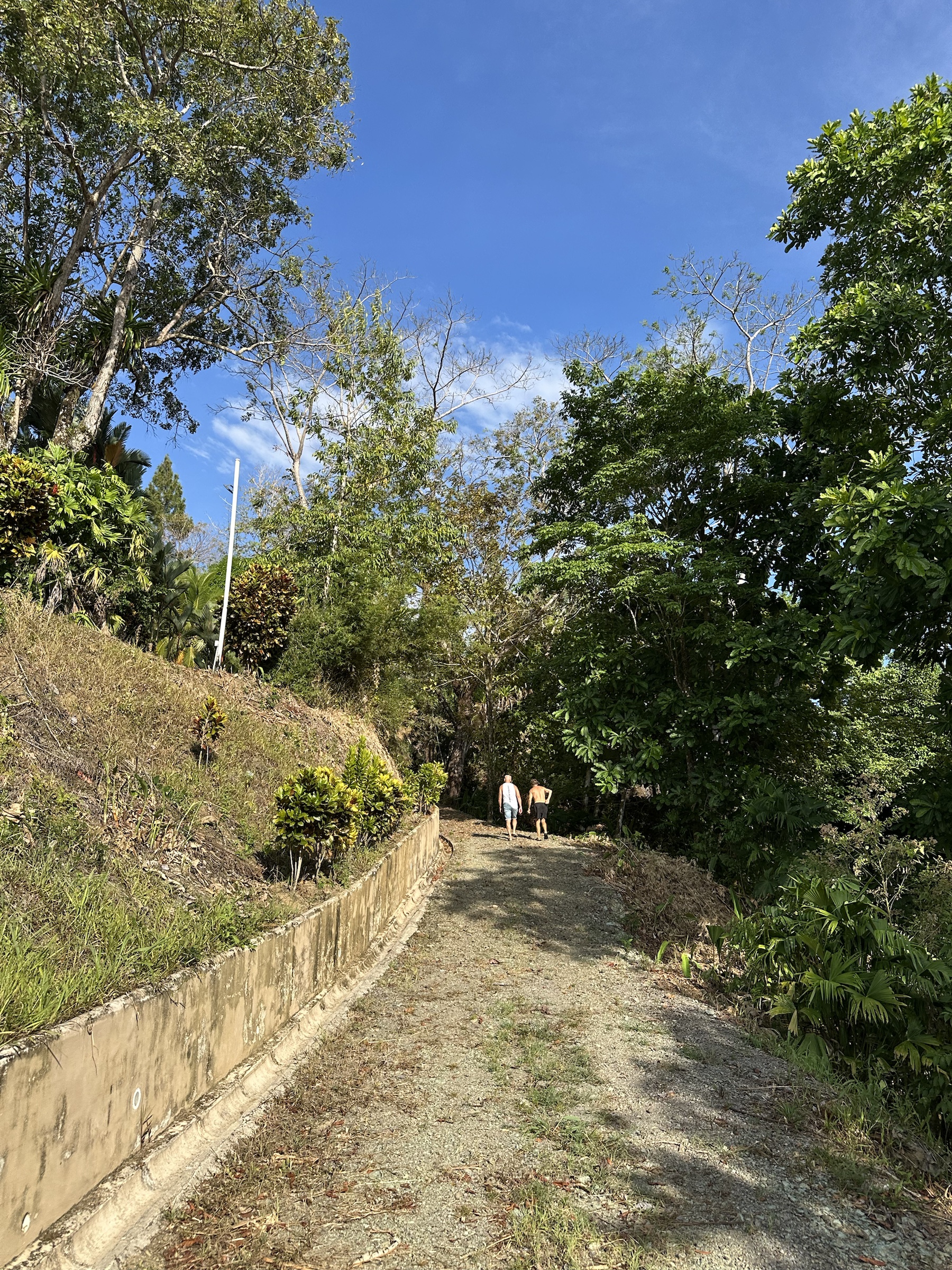
Costa Rican coastal real estate has spent thirty years repeating one pattern, north to south. A region is "discovered" by surfers and biologists; infrastructure follows; early titled-land buyers do extremely well; the region saturates and prices push newcomers to look further down the coast. It happened in Guanacaste. It happened again along the Costa Ballena. I bought my ridge above Pavones because I believe the pattern's next chapter is the deep south — and since I own land here, you should read this as an owner's argued case, not neutral analysis. I will make it honestly, risks included.
The northern province got the international airport in Liberia, the marquee resorts, and two decades of relentless development. Today it is a mature market: beautiful, convenient, expensive — with ocean-view land in prime corridors priced at levels that assume the growth has already happened, alongside real congestion and recurring seasonal water stress in the driest region of the country. Mature markets are fine places to park money; they are not where a patient buyer finds asymmetry. When professionals who did well in Guanacaste describe where they are looking now, the compass needle points down the map.
The stretch from Dominical through Uvita to Ojochal is the controlled experiment. Twenty years ago it was hard-to-reach jungle coast. Then the Costanera highway was fully paved around 2010, and the decade that followed repriced everything: hillside lots that sold for tens of thousands became mid-six-figure view estates, and a wellness-and-ecotourism economy filled in behind the road. The lesson is not subtle: in rural Costa Rica, asphalt is alchemy. Access arrives first; value follows it. Anyone who walked that coast in 2005 and hesitated has spent twenty years remembering it.
The Golfo Dulce region — Golfito, Pavones, the Osa's gulf shore — is where the same preconditions are now visibly assembling:
I will not quote you a per-square-metre index for a market this thin — anyone who does is selling something. The honest quantitative statement is relational: comparable titled ocean-view land in the Golfo Dulce region trades at a fraction of Guanacaste or Costa Ballena levels, while sitting on the same coastline, in the same legal system, one infrastructure cycle behind. The gap is the thesis. You are not betting on Costa Rica inventing a new economy; you are betting that an existing, repeatedly demonstrated diffusion continues one region further — with land you can hold cheaply (0.25% annual tax) while it does.
The thesis only works through the right asset. My filter, having applied it with my own money: titled land only — the concession coast rents its upside from the municipality, as I explain in the title-vs-concession guide; elevation over beachfront — views, breeze and drainage outperform flat lots in both liveability and scarcity; water and access resolved — a view without a water letter is a photograph, not an investment; and groundwork done or honestly priced — terraces, retaining and drainage are where budgets die, so land where they exist carries hidden, boring, real value. If a parcel passes all four, the last filter is the oldest one: buy from someone willing to hand you every document before you ask. The general mechanics are in my buying guide.
Remoteness is real: this is a six-hour drive or a regional flight, and some buyers' partners veto it on arrival. Infrastructure moves on Costa Rican time; the marina is built, but do not underwrite an international airport into your numbers. The rainy season tests roads, patience and cheap construction every single year. Exit liquidity is slower than in mature markets — you sell to a smaller, more specific pool of buyers, on the property's story rather than on a price index. And climate discipline matters everywhere in the tropics: elevation and engineered drainage are not amenities here, they are insurance. None of these risks refute the thesis; they price it. They are also, frankly, why the entry point still looks the way it does. Budget each of those frictions into the price you offer, and none of them will ever manage to surprise you.
If the thesis interests you, structure the decision like the patient trade it is. Horizon: think in a five-to-ten-year frame; infrastructure diffusion is measured in road budgets and election cycles, not quarters. Carry: this is where Costa Rica is unusually kind — at 0.25% annual property tax plus a caretaker, holding titled land costs a fraction of a percent of its value per year, so time works for you instead of bleeding you. Optionality: the strongest positions are parcels that do not need the thesis to succeed — land where you could build a home you would love, or an income asset like a lodge or retreat, tomorrow. Then regional appreciation becomes the bonus, not the requirement. Entry discipline: negotiate on documents and groundwork, not on dreams; every colón of engineering already in the soil is a colón you do not spend later at today's prices.
And one portfolio note said plainly: land this far south is a concentrated, illiquid position, not a substitute for boring diversified savings. The buyers who sleep well here bought with money that had a decade of patience in it — and then discovered, usually within the first green season, that they had accidentally bought the place they most wanted to be anyway. That second part is not in the spreadsheet, but it is the part everyone mentions.
My own 1.97 hectares are the thesis in miniature: titled (Folio Real 6-190768-000), 78–152 metres up with the gulf panorama, water in the village 750 metres away, INTA-certified soils, and the expensive, boring groundwork — three terraces, retaining walls, drainage, a pool — already absorbed by a previous owner: me. It can carry a boutique eco-lodge, a retreat, or simply appreciate quietly under its own forest while the region catches up. Whether it should be yours is a conversation, not a headline — the documents are ready, and I answer directly on WhatsApp. Whatever you decide, decide it the way this whole coast has always rewarded: early, informed, and standing on the land itself.
Keep reading:
It is an early-stage market with a repeatedly demonstrated pattern behind it: access improves, then titled land reprices — as happened in Guanacaste and the Costa Ballena. It rewards patient buyers of titled, view, water-secured land and punishes short horizons. Do your own due diligence; this is an owner's perspective, not financial advice.
Those are mature markets — convenient, liquid and fully priced. The South Zone offers the same coastline and legal system one infrastructure cycle earlier, at a fraction of the price, in exchange for remoteness and a slower exit.
Buying the wrong legal animal — concession or possession instead of titled land — or raw slope without water and drainage. Both are avoidable with basic due diligence: folio real study, water letter, and walking the land in the rainy season.
No agents in the middle — ask the price, request documents or arrange a visit, straight on WhatsApp.