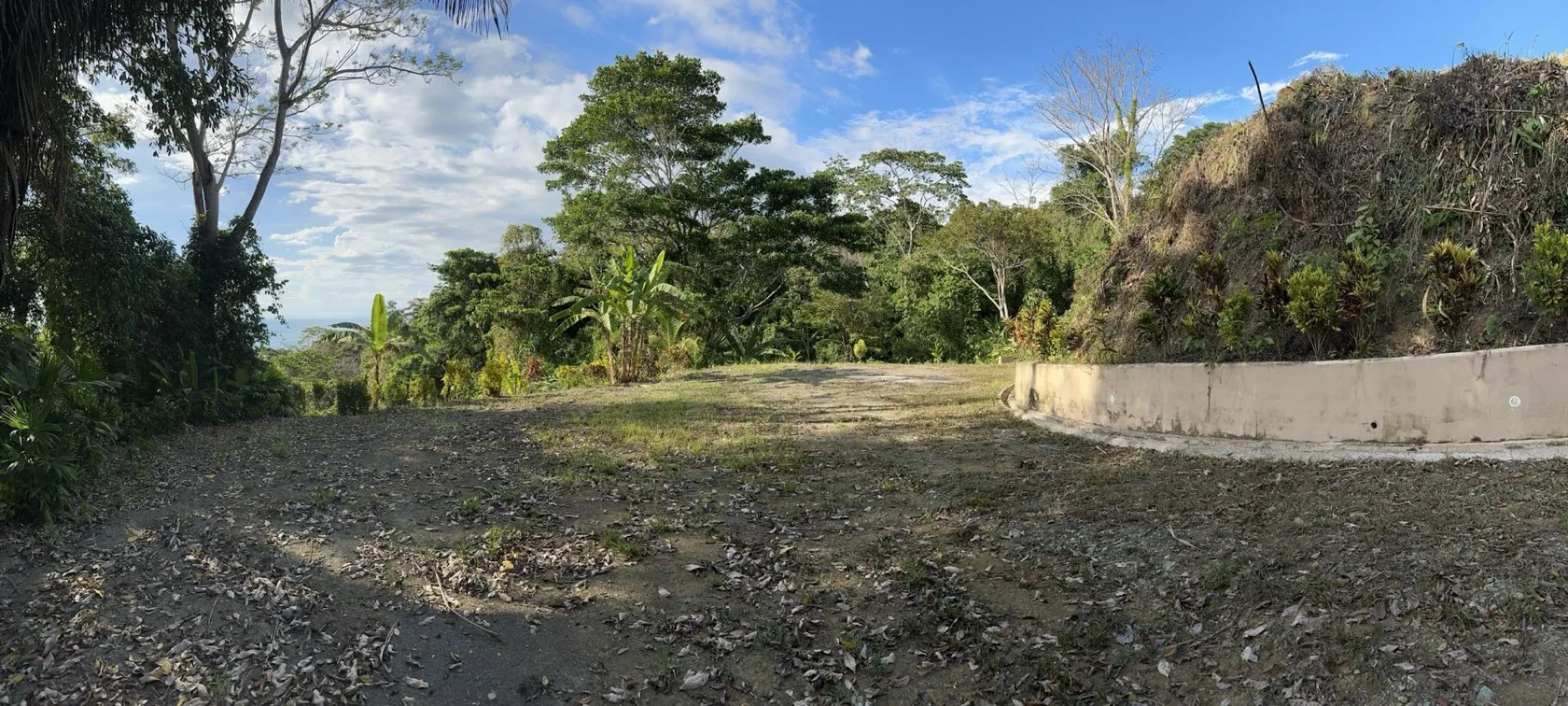
The short answer: before any deposit on land in Costa Rica, confirm the title in the Registro Nacional (the folio real and a fresh estudio registral), match the registered survey — the plano catastrado — to the land you actually walked, and get written proof of land use, water and legal access. Escrow, notary and closing costs only protect you if those basics are clean. The table is the checklist; the notes below it explain each item and how to verify it yourself or through your lawyer.
The right-hand column shows where the titled ridge in La Yerba, Pavones stands on every point. "Published" means the fact is stated on this site; "available before a deposit" means the document is shared with serious buyers so their lawyer can check it independently.
| # | Check | Document (Spanish name) | Where to verify | This ridge |
|---|---|---|---|---|
| 1 | Registered, fee-simple title | Folio real · finca inscrita | Registro Nacional, by folio number | Published: Folio Real 6-190768-000 |
| 2 | Owner, mortgages and liens | Estudio registral / certificación | Registro Nacional — ask for one issued in the last 30 days | Your lawyer can pull it with the folio number |
| 3 | Survey matches the ground | Plano catastrado | Catastro Nacional + a topographer on site | Available before a deposit |
| 4 | Outside the maritime zone | Zona marítimo-terrestre status | Distance from the high-tide line, municipal records | Published: titled ridge, 78–152 m up, inland of the zone |
| 5 | Land use allows building | Uso de suelo + INTA soil study | Municipality; INTA-accredited report | Published: INTA 2025, 100% uso conforme |
| 6 | Forest and protected areas | Forest classification, Forestry Law 7575 | INTA / SINAC mapping, site survey | Published: 1.28 ha protected forest, 0.69 ha buildable |
| 7 | Water | Carta de disponibilidad de agua (ASADA / AyA) or registered source | Local ASADA or AyA | Available before a deposit |
| 8 | Legal access | Public road or registered servidumbre | Plano, registry, municipal road map | Available before a deposit |
| 9 | Property tax up to date | Impuesto de bienes inmuebles receipts | Municipality of the canton | Ask the owner |
| 10 | Seller can actually sign | ID or corporate personería jurídica | Registro Nacional, your lawyer | Published: sold directly by the owner |
| 11 | Money moves safely | Option contract + SUGEF-registered escrow | SUGEF list of registered escrow firms | Agree with the owner |
| 12 | Closing budget | Transfer tax, registry stamps, notary | Written estimate from your notary | Typically 3.5–4.5% of the price |
The folio real is the property's identity. Every titled property in Costa Rica is registered in the Registro Nacional under a folio real number, and anyone can consult it through the registry's online service. Ask for the number in your first conversation with any seller. If there is no folio real, you are not looking at titled land — it is a concession or a possession claim, which the titled land vs concession guide explains.
The estudio registral is the health check. A registry study, or certified copy, shows the registered owner, the area, mortgages, liens, easements and any annotations such as pending lawsuits. Order one issued within the last 30 days, and have your lawyer order another just before closing: a lien registered in between is exactly what escrow is meant to catch.
The plano catastrado must match the ground. The registered survey gives the shape, area and boundary markers of the lot. Check that it is linked to the folio real, that the area agrees with the registry, and — most importantly — that the corners on paper are the corners you walked. A topographer can locate the markers in a day. Fences in the tropics move; registered plans do not.
Along the coast, the first 200 metres from the high-tide line are the maritime-terrestrial zone: the first 50 metres are public, and the rest can only be held on a municipal concession, never owned outright. Land above and inland of that zone can be titled. Next comes land use: the municipality issues the uso de suelo certificate, and an INTA soil study classifies what each part of the lot can legally be used for. Forest protected under Forestry Law 7575 cannot be cleared, so the real question is not "how many hectares?" but "how many buildable square metres?"
On this ridge the answer is on paper: the 2025 INTA studies certify 100% uso conforme and map the lot into 1.28 ha of protected secondary forest and 0.69 ha of disturbed soil — the part already shaped into three building terraces.
No water letter, no building permit. A buildable lot needs a water availability letter from the local ASADA or from AyA, or a registered well or spring with the paperwork to match. Access matters just as much: a public road or a registered easement (servidumbre) is safe; a track across a neighbour's land that is merely tolerated is not, however long it has been used.
For this ridge, the approach is paved almost the whole way from the coast, internal gravel roads already reach every terrace, and the village services of Rio Claro de Pavones — including its water system — are about 750 metres away. The water source and the road status are documented and shared with serious buyers before any deposit.
Costa Rica's annual property tax is low — 0.25% of the registered value — which is exactly why arrears sometimes go unnoticed. Ask for the municipal receipts. Then confirm that the person signing can actually sell: their ID must match the registry, and if the land is held by a corporation, your lawyer checks the personería jurídica to see who is authorised to sign for it. This ridge is sold directly by its owner, with no agent in between.
The mechanics are standard. You sign an option-to-purchase agreement and place the deposit with a SUGEF-registered escrow company — never in a seller's personal account. Your lawyer completes due diligence during a 30–60 day window, then the transfer deed is signed before a Costa Rican notary and registered in the Registro Nacional. Registration, not payment, is what makes the land yours. Budget roughly 3.5–4.5% of the price for closing: a 1.5% transfer tax, registry stamps of a bit under 1%, notary fees of about 1–1.5%, plus escrow and due-diligence costs. The full process is in how to buy land in Costa Rica as a foreigner.
Six of the twelve points are already public on this site: the folio real, the position outside the maritime zone, the INTA land-use result, the forest and buildable split, and the fact that you deal with the owner directly. The documents behind the rest — the plano, water, access and tax receipts — go to serious buyers before any deposit, so that your own lawyer, not the seller, confirms them. Read the land and legal summary, then ask for the file on WhatsApp and run this list on it as hard as you would on any other lot.
Shortlisting lots? Our guide to Pavones real estate explains the local market these checks apply to.
Titled (Folio Real 6-190768-000), outside the maritime zone, 100% uso conforme — and the document file goes to serious buyers before any deposit.
Keep reading:
It is the number under which a titled property is registered in the Registro Nacional — the property's legal identity. Land without a folio real is a concession or a possession claim, not titled property.
Order a current estudio registral for the folio real. It shows the registered owner, mortgages, liens, easements and annotations. Have your lawyer order a fresh one again just before closing.
The registered survey plan of the lot: shape, area and boundary markers. It should be linked to the folio real, and its corners should match what you walk on the ground.
Usually 30–60 days under an option-to-purchase agreement, with the deposit held by a SUGEF-registered escrow company until closing.
No agents in the middle — ask the price, request documents or arrange a visit, straight on WhatsApp.