Pavones real estate is not one market but three, and most confusion — and most bad purchases — comes from mixing them up. There is titled land on the ridges and in the valleys behind the coast, registered in the Registro Nacional under a folio real and owned outright, by foreigners and Costa Ricans alike. There is concession land inside the 200-metre maritime zone along the beach, which is never owned, only held on a municipal concession with residency and corporate rules attached. And there is a small number of finished homes and lodges, most of them built by owners who arrived in the 1990s and 2000s and are now selling on.
Prices, paperwork and risk are different for each. The guide on titled land versus concession covers the legal side in detail; this page is about what the market actually offers and what it costs in 2026.
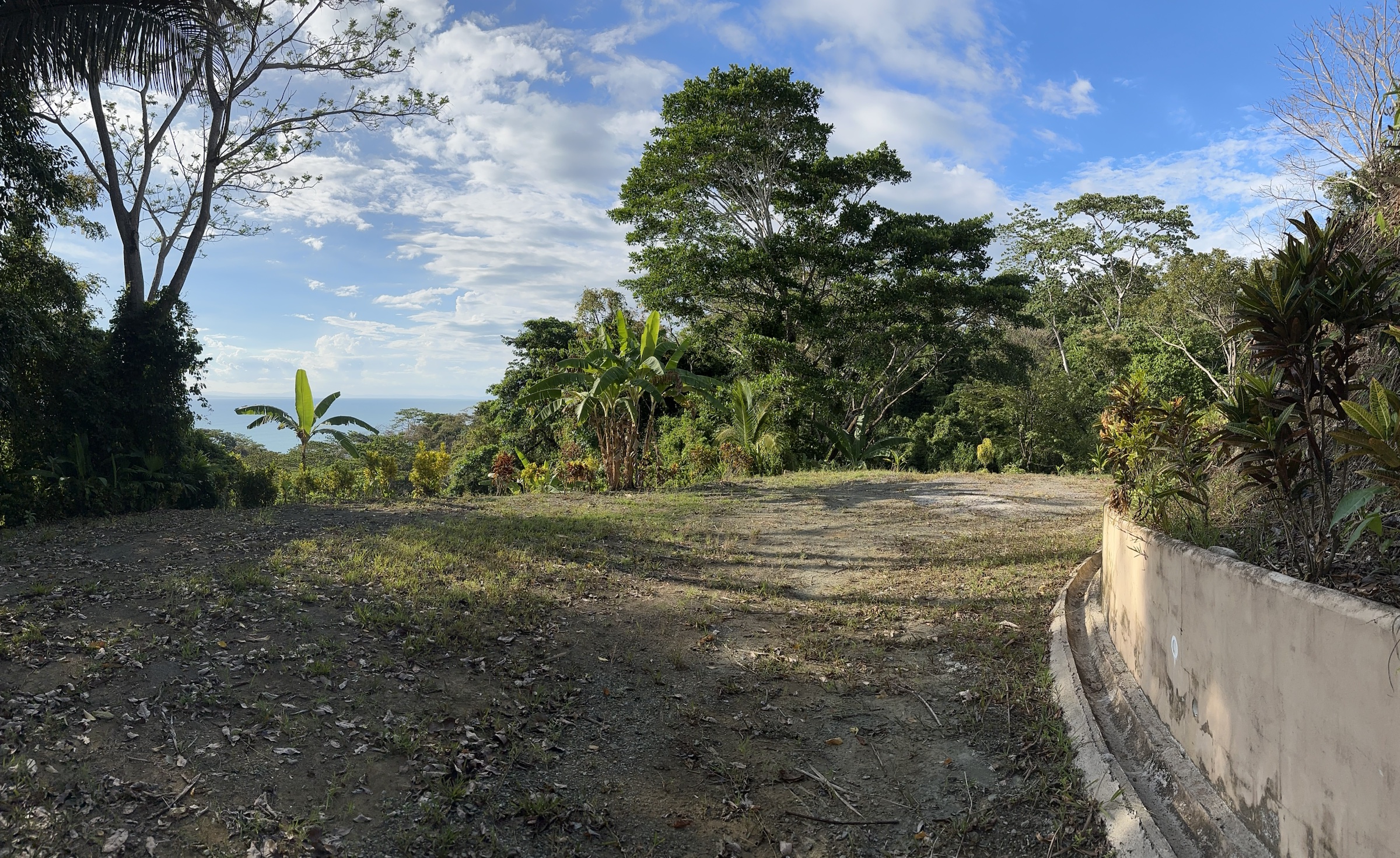
This is where most serious buyers end up. Lots of 1–5 hectares on the ridges above Rio Claro, La Yerba and towards Punta Banco, with ocean views, road access and — on the better plots — water and power at the boundary. Titled land can be held in your own name or a corporation, financed privately, built on with a normal municipal permit, and resold to anyone. Supply is limited because the good ridge lines are few and many owners are not selling.
The lots facing the point itself and along the beach road sit in the maritime zone. They can be wonderful to hold, but the buyer must qualify (Costa Rican corporations with majority local ownership, or long-term residents), the concession must be current with the Municipality of Golfito, and the resale market is thinner. Prices per square metre look attractive until the renewal risk and the restrictions are priced in.
A handful appear each year: two- and three-bedroom houses on titled land, surf cabinas with rental history, and small eco-lodges. They sell on the quality of the construction as much as the location — the humidity here punishes shortcuts — so budget for a proper structural and electrical inspection before signing.
These are ranges from listings, closed deals we know of and our own conversations with neighbours and lawyers over the last year. Treat them as orientation, not an appraisal.
For comparison, equivalent ocean-view titled land in Uvita or Dominical now trades at two to four times these numbers, and Guanacaste's coast is beyond that. That gap is the whole investment case for the south — see why investors are looking at Golfito and Pavones.
Pavones has no multiple-listing service and only a couple of part-time agents. Most land changes hands through neighbours, lawyers in Golfito and San José, and word of mouth. That has two consequences. First, "listings" online are often stale or duplicated at different prices. Second, the buyer has to do the verification an MLS would normally imply: pull the folio real at the Registro Nacional, order a survey against the fence lines, confirm road access is registered and not just tolerated, and check water rights. Our step-by-step guide to buying land in Costa Rica walks through each check.
The road from San José is now paved essentially to the village, Golfito's marina and duty-free zone keep the gulf's service town alive, and the traveller mix has shifted from surf-only to surf plus wellness, remote work and long stays. Titled ridge land with views is the asset that benefits first from that shift, because it can be built on and rented without the maritime-zone restrictions. Supply of that land is fixed; the wave, the Osa halo and the distance from everything else are not going to change.
If you are looking at Pavones real estate seriously, start with the titled ridge above La Yerba that this site exists to sell, walk it, and use the questions above on it as hard as you would on anyone else's land. Ask the price and we will answer plainly.
Keep reading:
Yes. Titled land outside the 200-metre maritime zone gives foreigners the same ownership rights as Costa Ricans, with no residency requirement. Concession land inside the zone has residency and corporate restrictions.
Ocean-view titled land runs roughly USD 25–60 per square metre; jungle and river plots USD 8–20; small village lots USD 80,000–250,000. Finished homes typically USD 350,000–900,000.
No MLS. A couple of part-time agents work the area; most sales happen through neighbours and lawyers. Buyers must do their own registry and survey checks.
Confusing concession land with titled land, and buying access that is tolerated rather than registered. Both are solved by checking the folio real, the plano and the road status before paying a deposit.
No agents in the middle — ask the price, request documents or arrange a visit, straight on WhatsApp.