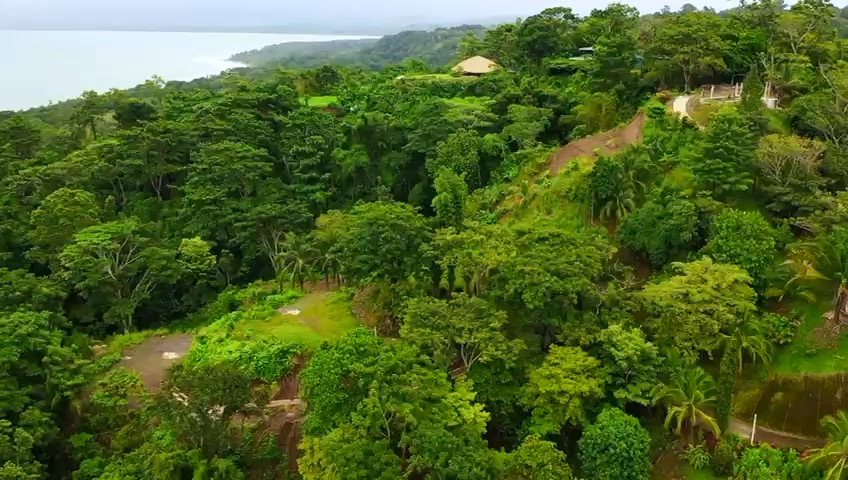
Pavones is the kind of place travel writers call "the end of the road" because, factually, it is one: the paved route winds south from Golfito along the Golfo Dulce, and when it stops, you are here. A green shelf between rainforest and sea in Costa Rica's deep south, a few kilometres of coast, one legendary wave, and a community that has quietly mixed Costa Rican families and international settlers for forty years. I own the ridge above town — this site exists because of it — and this is the guide I send friends before their first visit.
Pavones sits in the canton of Golfito, Puntarenas, on the southern shore of the Golfo Dulce, about 30 km from the Panamanian border. There are three honest ways in. Driving from San José takes six to seven hours: the Costanera highway south through Uvita, then inland at Palmar, past Golfito's turnoff and around the gulf — paved essentially the whole way now, with only the final hills on well-kept gravel. Flying, Sansa runs small planes from San José to Golfito in under an hour; from the airstrip it is roughly a 90-minute drive around the gulf. From the border, Paso Canoas is about two hours away, which matters if you connect through Panama City's long-haul hub. A 4x4 is not strictly required in the dry season, but it is what everyone here drives, for good reasons that arrive with the rain.
Pavones exists on the world's surf map for one reason: a left-hand point break routinely listed among the longest left waves on Earth. On a solid south swell the wave wraps around the point and peels for so long that rides are measured in minutes — two, sometimes three — and surfers stagger out of the water laughing at their own burning legs. The swell window runs roughly April to October, peaking in the middle months, which inverts the usual Costa Rican tourism calendar: Pavones' high season is the green season. Between swells the town exhales, and that rhythm — packed lineup, empty lineup — is part of its charm. I wrote more about the wave and how the land relates to it on the wave page, and if your plans lean commercial, the case for a surf school above the point writes itself.
The wave gets the fame; the gulf deserves half of it. The Golfo Dulce is one of the planet's few tropical fjord-like gulfs — deep, calm, ringed by rainforest, and so biologically rich that humpback whales from both hemispheres come here to calve (roughly July–October and December–March). Daily life on the water means dolphins alongside boats, kayaking at dawn when the gulf turns to glass, sportfishing runs, and snorkelling trips across to the Osa Peninsula, where Corcovado National Park protects what National Geographic once called the most biologically intense place on Earth. From my terraces you look straight over this gulf; sunsets land in the water in front of you.
The practical heart of the area is Rio Claro de Pavones, the small service hub where the supermarket, sodas (family restaurants), school and health post cluster — my land's gate is about 750 metres east of it. Pavones proper adds surf shops, a famous cantina by the point, yoga studios and a scattering of restaurants that swell and shrink with the swell. For everything bigger — banks, hospital, hardware in quantity, the duty-free zone — Golfito is about an hour away, and people combine errands into one gulf-road trip. Power comes from the ICE grid, water from the local ASADA, phone coverage is respectable 4G, and Starlink has ended the internet question — remote workers now run companies from houses in these hills. There is a rural steadiness to it all: this is a functioning Costa Rican district first, and a surf destination second.
This is the humid tropics: expect 25–32°C year-round, a dry season from roughly December to April, and a green season from May to November that peaks in September–October, when it can rain hard most afternoons. The land answers the heat with elevation: up on the ridge at 78–152 metres, evenings bring a gulf breeze the beach never feels. Locals plan around the calendar rather than fighting it — building in the dry, surfing the wet, and treating October as the month for projects indoors.
A recognisable mix: surfers who came for a season twenty years ago and never left; Costa Rican families who have farmed and fished this shore for generations; remote workers who discovered that a fibre-fast satellite dish plus a $6 casado equals a quality of life no city offers; and, increasingly, wellness and longevity people drawn by the raw nature and the quiet. The community is small enough that reputations matter and newcomers integrate by showing up — to beach cleanups, school fundraisers, football games. It is not for everyone, and the people it is for tend to know within a day.
If you are coming to evaluate the place — as a traveller or a future owner — three days tells you most of what you need. Day one: arrive by early afternoon, check into one of the small lodges near the point, and spend sunset watching the wave from the rocks by the cantina, whether or not you surf; the town's whole geometry makes sense from there. Day two: surf or swim at dawn, then drive the coast road south toward Punta Banco to see how the shoreline wilds out past town, stop at a soda in Rio Claro for a casado lunch, and spend the afternoon up in the hills — this is when visitors discover that the ridge views, the breeze and the toucans are a parallel Pavones most tourists never meet. Day three: get on the water. A morning boat on the Golfo Dulce — dolphins near-guaranteed, whales in season — resets your understanding of why people anchor their lives to this bay, and you are back by noon to eat fish tacos and argue about which sunset was best.
Two practical notes from someone who hosts visitors regularly: book accommodation ahead during the surf months, because beds near the point are few and swell forecasts fill them fast; and bring cash in colones — cards work in more places every year, but the nearest reliable ATMs are in Golfito, and the best meals in town are still paid in paper.
Because of the maritime zone, most flat land near the water is concession or possession, not ownership — the full explanation is in my titled-vs-concession guide. Titled, buildable, view land concentrates on the ridges behind town, and it is scarcer than visitors assume: the hills are carved into large fincas that rarely come to market. That scarcity is why I built this site for mine — 1.97 titled hectares with terraces already cut, a pool, and the gulf panorama — instead of listing it in a portal. However your own Pavones story goes, come during both seasons before you commit, walk the land you like in the rain, and you will understand the place faster than any guide can teach it.
Keep reading:
Drive six to seven hours via the Costanera and Rio Claro de Pavones (paved except the final hills), or fly Sansa to Golfito in under an hour and drive about 90 minutes around the Golfo Dulce.
South swells run roughly April to October, peaking mid-year — the wave's famous multi-minute rides need those swells. The dry season (December–April) is calmer on the water but greener for everything else.
It is a small rural district where people know each other, with the usual small-town common sense applying. Most long-term residents cite the community itself as a reason they stayed; land security comes from titled ownership and present neighbours.
No agents in the middle — ask the price, request documents or arrange a visit, straight on WhatsApp.